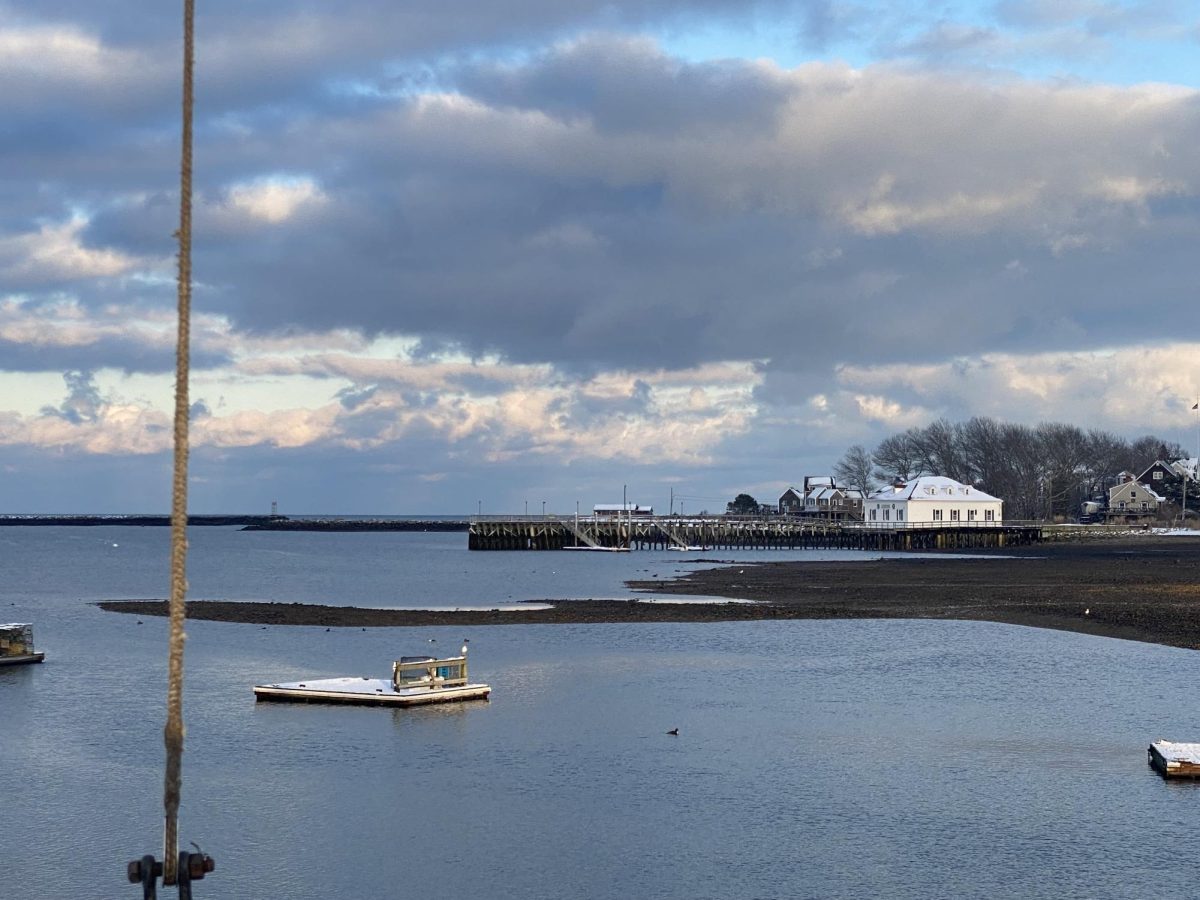
For many years, Scituate’s involvement in the fishing industry has been a source of local pride. Fishing is equally important to the people who catch the fish as it is to the people who eat them. An important topic of discussion throughout the fishing conversation is how to protect the areas where we fish.
In my environmental science class, we’ve learned there is an overfishing crisis that impacts biodiversity, not just in Scituate but everywhere around the world. As part of a class project, my project partner, SHS senior Cullen Moran, examined several aspects of local fishing to develop solutions to fishing-related problems. Cullen and I summarized all of the research and interviews we conducted to answer this question: To what degree can no-take or highly-protected Marine Protected Areas (MPAs) provide resilience and/or a buffer against ecosystem disruption caused by climate change and ocean acidification?
Marine Protected Areas (MPAs) are ocean zones designated to protect marine life and habitats. Fishing can be banned or restricted in these areas to protect fish species. Sometimes these areas boost fish stock. No-take zones are similar, where fishing and other resource extraction are banned to protect marine ecosystems.
To gain more experience on this topic after conducting our research, we decided to interview a local fishing enthusiast, SHS senior Finn O’Connor. Passionate about fishing since he was a young child, O’Connor gave us a lot of insight into this topic.
According to O’Connor, fish in the no-take zones are noticeably healthier. This aligns with our research. In addition, the surrounding locations that may not be no-take zones are increasing in fish populations. When asked if he’s seen any climate change effects on fishing in Scituate, O’Connor said he’s noticed a change in where fish are located because of increasing water temperatures as a result of climate change. Climate change is warming ocean waters and shifting species ranges. Native or normal species may decline, while new or invasive species increase. This affects local populations and ecosystems, along with what fish are caught.
Ocean acidification is a big factor destroying marine ecosystems. Ocean acidification is the decrease of pH in the ocean because of excess carbon dioxide. CO2 levels are reduced by higher populations of secondary consumers that eat primary consumers, leading to a higher plant population. This phenomenon breaks down calcifying organisms’ shells, like corals and shellfish. These organisms are crucial for the health of marine ecosystems and fishing. On ocean acidification and its effect on local fishing, O’Connor explained that “shellfish are a very important part of the ecosystem.”
We learned that no-take MPAs tend to have larger and more abundant fish, which increases biomass and can buffer the population from environmental change, helping survival and reproductive rates. Our fishing representative has noticed that MPAs have also increased fish populations, affirming our research. One very popular MPA mentioned in the interview was Stellwagen Bank, where O’Connor has noticed an abundance, specifically of tuna.
MPAs and no-take zones can provide buffers to climate change and ocean acidification so fish habitats can be protected, and recreational fishing can continue to be sustainable. These no-take zones allow fish populations to increase and restock. This continues a steady amount of fish for fishers to use sustainably. Sustainable fishing buffers like MPAs are very important in sustainable fishing and, more broadly, the fight against climate change.