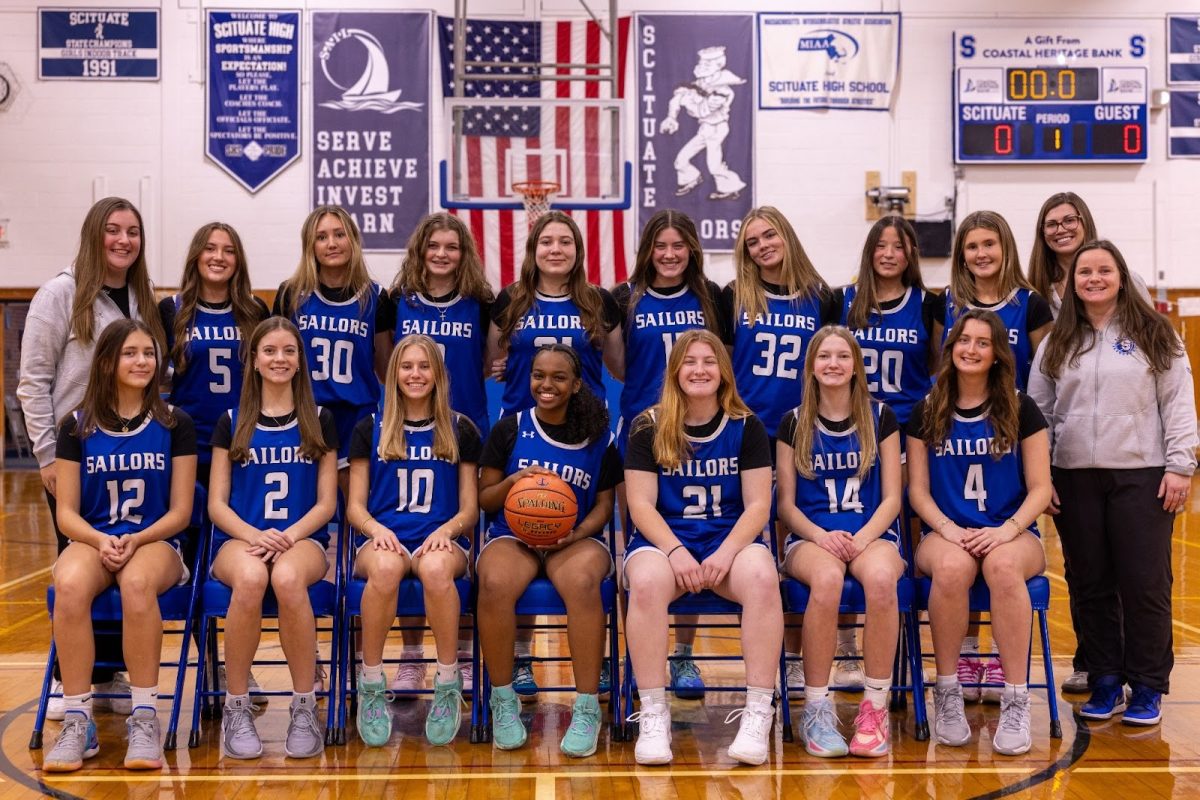
Girls’ and boys’ sports are highly valued at SHS, but are they valued equally? Both have extremely popular and successful programs, but we wondered whether gender-based stigmas may diminish some student-athletes’ ability to compete at the highest level. Throughout our research process, we found a substantial gap in our interviewees’ responses, as the coaches’ answers contrasted with the athletes’ perspectives.
We interviewed the SHS girls’ basketball coach, Amy Sabolis, and the boys’ basketball coach, Matthew Poirier, to gain their professional, in-depth understanding of what goes on behind the scenes of the varsity programs. They unanimously agreed that both the girls’ and boys’ basketball teams at SHS have equal opportunities and access to materials to support their success.
When Coach Sabolis was asked whether there was a scheduling priority among the boys’ and girls’ teams, she explained that both programs have open lines of communication, noting that they “figure it out collectively as two separate programs working together to make sure that it’s equitable for both teams.”
Coach Poirier has a similar outlook on the basketball programs, stating that there is no difference in how the two teams are treated. When he was asked whether the boys’ basketball team is more cherished than the girls’ basketball team, he responded, “Absolutely not.” He elaborated by saying that SHS Athletic Director Scott Paine “makes facilities available to ALL.” Both coaches suggested that the two basketball programs can secure equitable resources and practice times to support their teams’ success.
Nevertheless, we found a notable difference in the interview responses of the student-athletes themselves. We met with athletes of both genders who play sports, including basketball, softball, and baseball, and left the interviews with a differing consensus from the coaches’ standpoints.
We interviewed the girls’ varsity basketball tri-captain, SHS junior Julia Tolton, to get a student-athlete’s perspective on a sport that attracts more fans during boys’ games and tournaments. When asked about one aspect she would change within the athletic program at Scituate High School, she responded, “There are a lot of teams that just aren’t taken seriously, and, yeah, if something were to change, I just want everyone to be treated the same. Like, taken seriously.” As an important figure in the success of the girls’ basketball program, Tolton wishes the SHS girls’ basketball team could be more respected and on equal footing with all programs here at SHS, while also accounting for those who may be overlooked.
In an effort to understand the different perspectives of the student-athletes from both basketball teams, boys varsity and junior varsity basketball players, SHS junior Khali Rahman and senior Jayden Louis shared their experience with the basketball program at SHS. When asked whether they believed the girls’ and boys’ basketball programs were valued the same, both students answered, “No.” However, the athletes reported that both teams have 8-10 hours of practice time per week, and both teams are generally given the same amount of time in the gym.
In parallel with Tolton’s perspective, the girls’ senior softball tri-captain, Riley Guterl, feels that her team and other girls’ teams often face discrepancies in equipment. Describing her experience with the softball program, Guterl stated, “Like any girl sport, we’re kind of treated as less. I don’t know, whether it be, like, transportation with the girls’ golf or, you know, the cheer team faces a lot, too.” Guterl elaborated on how equity in gear and practices can be a struggle for her and others, though she does believe that with good communication and collaboration, SHS sports can be equitable for all.
Additionally, SHS senior Daniel Beaudin, a member of the boys’ varsity baseball team, reflected on his experiences as a four-year student-athlete. When asked about the amount of baseball equipment the team had access to during previous seasons, he stated, “We are very fortunate to get all the support that we do from the athletic department, as they have helped us in the past.”
Beaudin presented a more positive view of the school’s sports programs regarding equipment, whereas Guterl expressed a different, more negative experience with the availability of materials. This disparity in perspectives highlights that some students believe sports equipment and resources may not always be distributed evenly across different athletic activities.
Coaches and student-athletes both value Scituate High School athletics, but they exhibit different stances on the distribution of materials, practice times, and overall attention toward their programs. While coaches and boys’ team members seem content with the resources and recognition they receive, girls’ team members appear to feel as though they are valued and supported to a lesser extent.